ProstaFlow Official Website › Blog › Sixty Days Or Two Hundred
Sixty Days Or Two Hundred: Two Clocks That Cannot Both Be Right
The seller offers a sixty-day refund window and separately suggests allowing 180 to 210 days to evaluate the product. Follow the second and the first closes four months before you have finished deciding. This article works through both clocks and explains which one this desk thinks should govern.

- The refund window is 60 days and it starts on the shipping date, not on the day you ordered and not on the day the parcel arrived.
- The seller's page separately suggests allowing 180 to 210 days to evaluate the product.
- One hundred and eighty days is also exactly the length of the six-bottle pack.
- The seller's own review summary puts the common wait at 3–6 weeks, which is comfortably inside the window.
- This desk does not repeat the longer figure as advice, and says why below.
The two clocks, side by side
Both of these figures come from the same seller and both appear in the same commercial material. Neither is hidden. They simply do not agree about how long a person should take to make up their mind.
| Clock | Length | Where it comes from | What happens if you follow it |
|---|---|---|---|
| The refund window | 60 days from the shipping date | The seller's written policy | You can still get your money back, on any pack, with opened bottles. |
| The seller's usage advice | 180 to 210 days | The seller's sales page | The refund window closed about four months ago. |
| The common wait | 3–6 weeks | The seller's own review summary | Comfortably inside the window, with weeks to spare. |
| The six-bottle pack | 180 days of capsules | The pack ladder | Two months inside the window and four months outside it. |
All four figures come from the seller's own material. They are not consistent with each other, which is the subject of this article.
Read the fourth row and the commercial logic becomes visible without anybody having to allege anything. One hundred and eighty days is not a round number chosen at random. It is precisely the supply in the largest pack on the ladder, which is also the pack with the lowest price a bottle and the one the seller reports as most often bought.
What following the longer one costs
Suppose a buyer takes the advice literally. They order the six-bottle pack, begin taking one capsule a day, and resolve to judge it properly at the end of the recommended period.
Day sixty arrives. Two bottles are gone, four remain, and the refund window closes. Whatever the buyer has concluded by then is now irreversible in commercial terms. They will spend the next four months finding out something they can no longer act on.
Reverse the order and the position is entirely different. Judge at day fifty, inside the window, and both outcomes are available: continue with four bottles in the cupboard, or return what is left. The information arrives before the deadline rather than after it.
- The window does not extend with the pack. Sixty days is sixty days whether you bought two bottles or six.
- It starts earlier than most people assume. From the shipping date, so several days have already gone when the parcel lands.
- Opened bottles are accepted. This is what makes the window usable at all, and it is a genuinely good term.
- A return needs an authorisation first. Which takes a phone call, which takes time, which is why day fifty and not day fifty-nine.
Why a long evaluation period gets suggested
There are two explanations and both are probably true at once.
The charitable one is that this is a slow category and a seller knows it. Nothing on this panel acts quickly, buyers who expect a first-week change are disappointed, and telling people to be patient is, up to a point, accurate advice.
The uncharitable one is arithmetic. An evaluation period three times the length of the refund window converts a trial into a purchase. A buyer who is still waiting on day sixty-one has bought six bottles.
This desk does not need to choose between those two explanations to reach a position, and the position is the same either way: patience is sensible, and patience beyond the point where you can act on what you learn is not patience, it is exposure.
The seller's common-wait figure of 3–6 weeks is reported on this website, because it is a realistic frame and it sits inside the window. The 180 to 210 day suggestion is named once, in the critique sections, as the seller's advice set against the seller's own clock, and is never repeated as advice of ours.
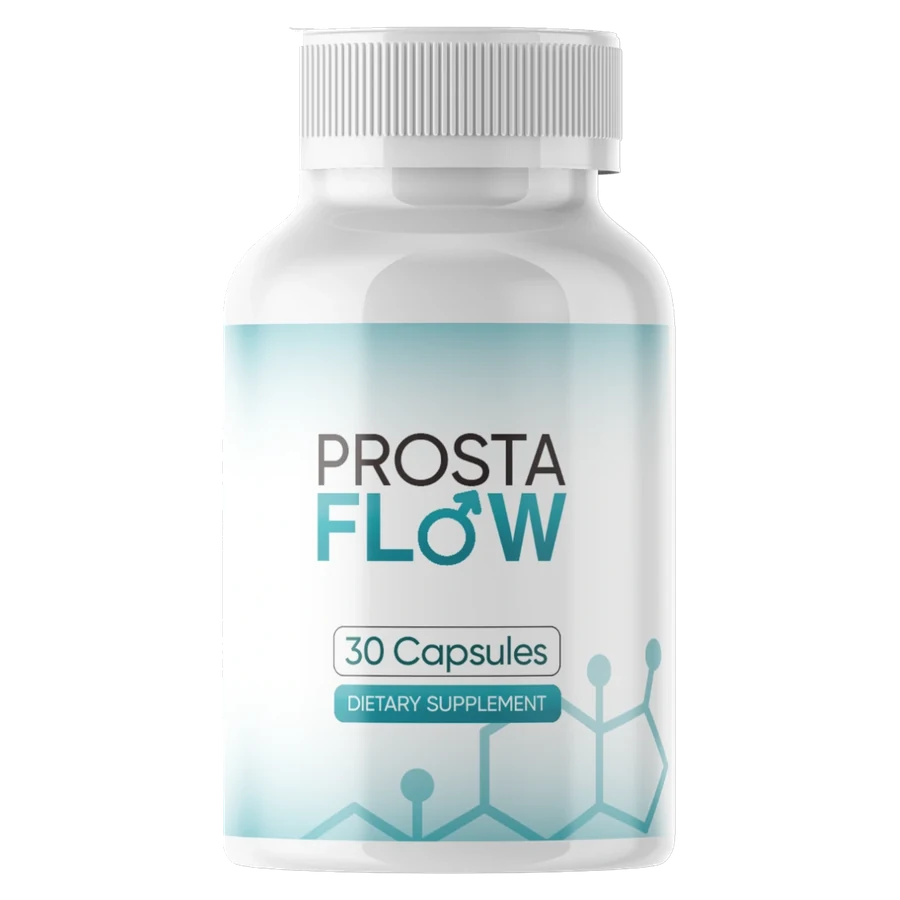
Two ProstaFlow bottles is two months, and so is the window
The smallest pack on the ladder covers the refund period end to end at $158 plus $9.99 shipping. Six bottles is the cheapest a bottle and four of its months sit outside the window.
Two bottles $158 · six bottles $294 · 60-day money-back guarantee
Order ProstaFlow On The Official WebsiteOne capsule a day · 30 per bottle · lot PRO-26/PR-5240
What the ingredient research says about timing
The honest way to settle a question about how long to wait is to ask what the trials on the ingredients did, rather than to pick a number.
Cormio's citrulline trial ran for one month at 1,500 mg a day. The dose-response model for muscle carnosine describes a store that fills over weeks at gram doses, which is the slowest thing on this panel and still measured in weeks rather than half-years.
Nothing in that literature supports a six or seven month evaluation period. The trials that measured anything measured it inside four to twelve weeks, and they did so at doses many times the ones on this label. A longer wait at a smaller dose is not a more rigorous test; it is the same test with less statistical hope and a closed refund window.
A sixty-day plan that actually resolves
Here is the alternative, in dates. It fits inside the window, it produces an answer, and it costs a sheet of paper.
| Day | What to do | Why that day |
|---|---|---|
| Minus 7 to 0 | Write a baseline week before the first capsule. | Nothing after this is interpretable without it. |
| 1 to 7 | Take it, keep counting, expect nothing. | Nothing on this panel acts on a first dose at any amount. |
| 8 to 30 | Keep counting. Do not change three other things at once. | One variable at a time is what makes a conclusion possible. |
| 30 | First honest look. Compare the week against the baseline week. | One bottle finished, and the start of the seller's own common wait band. |
| 50 | Decide. Continue, stop, or continue and reassess at the second bottle. | Leaves ten days to ring the desk, get an authorisation and post a parcel. |
| 60 | The window closes. | A claim started here has no margin in it at all. |
One capsule a day, 30 to a bottle. The refund window runs from the shipping date rather than from the day of the order, so it is already running when the parcel arrives.
The first row is the one people skip and the one that decides whether the rest was worth doing. Nothing you can count here holds still on its own for a fortnight, so a figure written down in advance is the only fixed point the exercise has, and the randomised trial of structured self-management depends on exactly this kind of counting to work at all.
The other habit worth keeping is not changing everything at once. If you are also going to move your evening fluid, cut afternoon caffeine and drink less in the week, stagger them. Otherwise day fifty produces a change you cannot attribute to anything. The how to use page sets the sequencing out.
What this means for which pack to buy
The clock argues for the small pack and the price argues for the big one, which is an ordinary tension and worth resolving consciously.
- Two bottles. Sixty days of capsules inside a 60-day window. Nothing is bought that the guarantee cannot reach. The honest first purchase.
- Three bottles. Ninety days, free shipping, and no reorder landing mid-decision. The third bottle is bought outside the window and should be treated as such.
- Six bottles. The lowest price a bottle by some distance, and four of its six months beyond the point you can act. A reasonable purchase for somebody on a second round and an expensive way to discover you do not get on with it.
None of that is an argument against the six-bottle pack. It is an argument for buying it knowingly, which is a different thing, and the pricing page prints the cost a day for all three so the trade is visible in dollars rather than in prose.
The same question on any other product
This is not a problem unique to one seller. Any time a product carries both a refund window and a suggested evaluation period, the two are worth comparing before ordering.
- Find the window and its starting point. Purchase date and shipping date are not the same day, and the difference is the part most often left vague.
- Find the suggested evaluation period. It is usually in the sales copy rather than in the terms.
- Compare them. If the second is longer than the first, the product is asking you to decide after the point at which deciding matters.
- Check the supply against both. A pack that lasts longer than the window is a pack partly bought on trust, which is fine when it is a conscious choice.
The window, its starting point, what it covers and the five steps to claim it are on the guarantee page, and the formal terms with the return address are on the refund policy page. NCCIH's guidance on using supplements wisely is a good general companion to reading any of it.
References
- Rezende NS, Swinton P, de Oliveira LF, et al. The Muscle Carnosine Response to Beta-Alanine Supplementation: A Systematic Review With Bayesian Individual and Aggregate Data E-Max Model and Meta-Analysis. Front Physiol. 2020;11:913. PMID 32922303. https://pubmed.ncbi.nlm.nih.gov/32922303/
- Cormio L, De Siati M, Lorusso F, et al. Oral L-citrulline supplementation improves erection hardness in men with mild erectile dysfunction. Urology. 2011;77(1):119-22. PMID 21195829. https://pubmed.ncbi.nlm.nih.gov/21195829/
- Brown CT, Yap T, Cromwell DA, et al. Self management for men with lower urinary tract symptoms: randomised controlled trial. BMJ. 2007;334(7583):25. PMID 17118949. https://pubmed.ncbi.nlm.nih.gov/17118949/
- Goueli R, Badlani GH, Welliver C, et al. Management of Lower Urinary Tract Symptoms Attributed to Benign Prostatic Hyperplasia: AUA Guideline (2026) Part I: Presentation and Evaluation. J Urol. 2026;216(2):143-151. PMID 42095481. https://pubmed.ncbi.nlm.nih.gov/42095481/
- Using Dietary Supplements Wisely. National Center for Complementary and Integrative Health, National Institutes of Health. https://www.nccih.nih.gov/health/using-dietary-supplements-wisely